
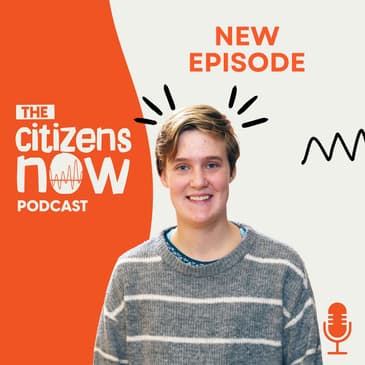
This week we hear from Lauren Roberts-Turner, a researcher and campaigner from England who specialises in issues relating to young people and the welfare state, poverty, and the economics of social justice. When we spoke she was involved with Leaders Unlocked which does incredible work enabling young people to speak out and have influence on the issues that impact their lives. Thanks to Rose Dowling, CEO at Leaders Unlocked, for putting me in touch with Lauren.
Lauren & I talked about her journey into activism, her thoughts about how change happens, the importance of peer research, the wonders of the NHS (UK National Health Service) and her learning about collaboration. What she doesn’t know about welfare and social justice isn’t worth knowing, enjoy the conversation!
Show links:
The ChildFair State Inquiry
Benefit Row – ‘Benefits Street’ TV show
Joseph Rowntree Foundation
YE2030 Research & Campaign & more here
Sheila McKechnie Foundation
Marcus Rashford & Free School Meals
Intergenerational Foundation
Youth blogs on London Challenges Poverty Week website:
Lauren’s writing:
- ‘Hit From All Sides: why the world isn’t working for Gen Z’
- Redesigning the Benefits System with Young People in Mind
- Youth Poverty: Understanding & Challenging the Narrative
You can listen to the Citizens Now Podcast on all the usual platforms so please subscribe to get access to episodes as soon as they’re released.
For more information about the show or to share your reflections on what you hear, please check out our website and we're on Instagram. If you'd like to be kept up-to-date on upcoming episodes and seasons please subscribe to the Citizens Now Podcast Substack.
If you’d like to contribute to my tip jar, please check out my Ko-Fi page. I’ve put this podcast together in my spare time and out of my own pocket so any help with meeting operating costs (hosting, website, sound mixing etc) will be greatly appreciated.
Credits:
Created, produced, and hosted by: Debs Erwin
Music: GlowCity
Artwork: Rachel Brady
Sound Editing & Mixing: Stu Reid, Stunt Double Music
Transcript: Lauren Roberts-Turner
Lauren Roberts-Turner: “And once you realise that, actually, you know, some of the biggest problems in society don't have to exist, then I think it's very hard to unsee that or look at the world a different way or go back to your normal life”.
INTRO
Welcome to the Citizens Now Podcast! My name is Debs Erwin, and this is a space to hear stories of young people from all over the world who are actively working to bring about positive social change.
This week I’m speaking with Lauren Roberts-Turner, a student, researcher, and campaigner from England who specialises in issues relating to welfare and poverty. We covered everything from Lauren’s journey into activism, projects she’s been involved in and her thoughts about how change happens, to the importance of peer research, the wonders of the National Health Service, and her learning about collaboration. I recommend checking out the show notes for some links to her work. I got so much out of our conversation, and I hope you do too.
INTERVIEW
DE: Well, welcome Lauren, I am so glad that we've been able to meet up for this podcast conversation. Welcome to the Citizens Now Podcast. So, Lauren Roberts Turner is a student, researcher, activist and active in a lot of spaces. So, in 2019, Lauren was part of the Child Fair State Inquiry in England, which looked at the welfare state that children really need. And has been involved with an organisation called Leaders Unlocked. So welcome, Lauren, and thank you so much for joining us. Could you start off by giving us a sense of the work that you're involved in at the moment? And some of the projects that you've been involved in? And also, your journey into that? How did you get sucked into this world?
LRT: Yeah, well, it's a world that I really didn't know existed when I was a much younger child, or about, I think a lot of people aren't necessarily aware that it exists, or it's an option. And that's one of the things actually that I spend quite a lot of time telling other young people about, because I think it can be such a rewarding experience. But, no, I was always one of those kids who was fairly obstinate, and I thought I wanted my primary school council to be more democratic, I was one of those kids. And so, I think I always felt sort of quite a keen sense of injustice. And then when I was 16, one of my friends was like, you always go on about the NHS, you always go on and on and on, and on and on about how good it is. There's this project that's going on, I think you'd like it. And that was the Child Fair State Inquiry. And that was about acknowledging that the welfare state really had fallen into disrepair. What if we threw our hands up in the air and said, ‘Right, let's, what would work for our young people? What would work for the children and young people we have now in Britain? And what would make sure they would have a good quality of life?’ And that was an amazing project to be part of, because it meant instead of starting off, on an initial issue, I started off on a broad, a broad thing of saying, 'Okay, what would make a good world?' And I think that that's allowed me to come into the space from a slightly different, with a slightly different lens. And so, I spent ever since 2019 I've been sort of working on that, so working on different issues, and my specialism is welfare and benefits, but also working on the sort of broader sort of social change that would be required to bring it in. Because one of the things we are sort of quite keenly aware is if you think about the context of 1942, and the sort of desire for a better world that came out of the horrors of World War Two, and that sense of societal cohesion, because they'd all been through this trauma together. That's not quite the situation we're in with, quote, where we're in quite a disparate world if you think about how people are being sort of atomized by social media. And so, the sort of the second aspect of that campaign is about 'how do we bring people together on sort of one footing to demand more?' And so that was sort of how I got into the project. And that first brought me into contact with Leaders Unlocked, which is a youth-led social change agency, which is all about training up young people to be leaders, but often researchers on the issues that affect them. So, I've been involved in a couple of youth employment projects - one which got quite big during the pandemic, where we looked at the impact of the lockdown measures in the pandemic, both on young people's employments, because they were disproportionately hit by unemployment, but also on their wider career aspirations for the future. And thinking about how as we come out of the pandemic, how can we change the sort of bigger structures that would enable these aspirations to sort of come to the fore. And then the other one, which was really interesting, again, on a slightly similar vein, was working with anthropologists from LSE [London School of Economics] to do ethnographic research in terms of what were the, again, what were the gains and losses from the pandemic, and what would help you make that better world for young people? And I really enjoyed doing all of that. But one of the things that I found quite frustrating was I would find that I, I do all this research, we spend a lot of time collating it, we think about how this fed into policies, I'd meet all these young people, often who were having really hard lives, that could be changed with the stroke of a pen, if someone in government decided on it, then it would go into a report. And then that would be that, someone might read it, maybe would go to a conference, everyone would say it's very nice and lovely. And then they go back to their lives. And actually, the on the ground lives of the people that I knew, and the people that I met didn't really feel like it had been impacted that much. I mean, one of the great things about Leaders Unlocked, is that actually the young people that do get involved in the project. Often, like, they get a lot out of it in terms of like me, it's like, I've got access to other projects, activism has become a big part of their life, you know, Leaders Unlocked is very good at making sure that the experience is very positive, and it can go on to things like helping them with their career goals. But nonetheless, that sort of wider structural change wasn't happening, based on, and the things that we were asking for in terms of like more funding, for example, for youth services, or public transport just wasn't coming into existence. And after I'd like said the same recommendation for like the fourth time, I got a bit sick of it.
DE: Just chipping in to explain that Lauren was given the opportunity to take up an internship at Leaders Unlocked which meant she had to pitch her own project. She wanted to figure out if Leaders Unlocked could become a campaigning organization and here, she explains more about the project she developed with a group of young people:
LRT: And so, I decided to do my trial campaign on the issue that I care about the most, which is poverty. And it's especially how poverty impacts young people, because this is one of the most underreported phenomenon, but also one of the most damaging times in your life to be affected by poverty. But also, if anyone is affected by poverty that is, it's always a great harm, and it's a great harm that can be avoided. And so, what I did was I worked with a fairly tight group of seven young people over the course of a year, from all different places in the UK with many different experiences. Some of them had poor mental health, some of them had been care experienced, some of them had experience of being long term unemployed. Some of them lived at home, some of them didn't. Everyone had sort of different factors in their life, different things that impacted the reasons they were in poverty, but they all had the shared experience of being in poverty. So, I brought them together. And we just spent quite a lot of time actually just, I mean, it being in a virtual, it was on Zoom so being in a virtual room, where actually, sort of teasing out people's experiences and creating that sort of safe space where you could say, ‘actually, yeah, I am on a low income, and I am on poverty. And that's not a source of shame, that it's also not my fault’. And that actually took quite a lot of time in terms of like establishing that safe place, helping people get to know each other, but also breaking down some of I guess, what you’d consider to be 'false consciousness' that society had like placed on young people, and that they've massively internalised about just needing to work harder, and you know that 'poor people are lazy', that sort of thing, which meant that they weren't sort of looking at the structural reasons for why there might, their life might be the way that it was. And so that was a really, I'd expected that to be the case a little bit, but I wasn't quite prepared for sort of how much sort of thinking and talking we needed to do on that area to sort of get people to think about the more structural issues, which is just. Like, I mean, I found that quite bleak, actually, in terms of how much at such a young age, you've already internalised the narrative that if things haven't worked out in your life, it's your fault, which obviously, is just not the case. We then thought about things like big structural policy change that would, they thought would change their lives. And the thing that they came up with was the introduction of a Universal Basic Income. And interestingly, they got there through a focus on values. They were talking about how they wanted things to be less individualistic, more universal, and that sort of led them to this, to Universal Basic Income as a policy. And we had, we had a couple of campaign plans. And then every time we drafted a campaign plan, the government collapsed and reformed itself. And we decided to focus, and I do think this is an interesting point, on actually creating the sort of wider societal conditions that would get governments, policymakers, but also people who work in NGOs, things like that, to think about young people and young people's poverty as an issue that really needs to be tackled. But also, just listen to lived experience of poverty. But if you think about some of the narrative, that we had early on in austerity, things like ‘Benefit Row’, the sort of, there's a long way to go really in terms of like, making it going from an individualistic issue to an issue that society needs to solve, which is where we need to get to for that sort of big sweeping change to be more possible. So, we worked with Camille, who's the campaigns manager at JRF, and just the most lovely person in the world. And she did some really amazing training with us about how to talk about poverty in a way that engages people who haven't experienced the issue.
DE: And that's, sorry that’s the Joseph Rowntree Foundation?
LRT: Sorry, that's the Joseph Rowntree Foundation. So, they're a big, like anti-poverty campaign group and think tank. She did this training about how they could use their experiences in a way that was engaging and positive and got people on board and sort of help break down some of those narratives like I've spoken about, that poverty only exists in Africa, or only exists in Victorian Britain or it's only because people are lazy and don't work hard. And then we worked with a writer on the team, the staff team of Leaders Unlocked and as a group, we got three blogs out and that was actually, I was so pleased with that, partly because we got a lot of really positive feedback. They got put up on the London Challenge Poverty Week website. People were really positive about them, but also because the people who had written them, it was their experience, and for them, you know, that took a lot of time. And it was a big project. And by virtue of the fact that the group of people that I was working with had come together because they had lived experience of poverty, they had very complex lives. And so being able to get to the point where you could give that time, and it to come out into such a positive piece, or such a well-crafted piece, was something that I was really proud to be part of.
DE: Like one of my observations, and I am not in any way, a specialist in any of these topics in the way that you have this expertise, Lauren, but I've observed that in my context, in the north of Ireland, in Northern Ireland, there has been a lot of emphasis on various kinds of employability initiatives with young people. And a lot of it kind of focuses on that individualised kind of personal development work. And obviously, there is absolutely a place for that some of that can be really helpful.
LRT: I think that's because they're fairly easy to fund, you can see if you've had an impact, if people get into work, if they get into work, they won't be on benefits, so then they won't be something the state has to worry about. And everyone can feel like they've done a good thing, because on the individual level, if that person gets into work, then hopefully that is a positive benefit on their life. But it is a bit more complicated than that. Is it good work? Is it the work that the young person wants? Is it something that's fulfilling, and that's going to help them develop in the rest of their life? I think we've got this very, in a whole society, not just with young people, we've got a thing about thinking about sort of like, the economy, and employment equals happiness. And actually, we've got to think about ways in which people have a good quality of life, and then work as a bonus, and it's part of that. But really, at the moment, we're in the situation where if you haven't got a job and you're unemployed, then that's gonna be fairly bleak. And so there's, it makes having a job such, such a big issue. And such, like we put all our emphasis on that is, instead of sort of maybe tackling some of the wider issues, and from that work that I did at YE2030 we know that young women are disproportionately likely to have mental health problems at work. We know that, for example, in the pandemic, young people from black Caribbean backgrounds were the most likely to be furloughed, young people from black Caribbean, or Pakistani backgrounds were the most likely to have their hours cut. So just getting into work is no real guarantee of a life change. But equally, it can make a big difference. So, it's not to sort of dismiss employment initiatives. But it is to think maybe, it is to say that maybe we should have a bit of a rethink about how we emphasise, where the emphasis we put on different parts of society is and how we ensure that actually, if you take one element away, that a young person is still able to have a good quality of life.
DE: Particularly on this topic, it seems to me there are very few opportunities for young people to have a say, which I think is what makes things like what you've been involved in, the Child Fair State Inquiry, and the YE2030 project that you mentioned, all of these things, these really stand out. So, I'm just curious about what why you think there has been that, why young people's voices just haven't been there? And why do you think it is important that they're there? And what do you think it is that, that young people bring to these issues then?
LRT: Well, it just takes quite a lot of time and money doing these research, like, it's much easier not to, you have to train up the young people, they’re a bit less reliable, because it's often their first jobs, you probably have to have, if they're under 18, you'll need an adult in the interview. So, you're like paying double basically. And it's like a bit unpredictable. They might sort of challenge research norms. Sometimes in academia, or sort of less academic research, there’s sort of accepted wisdom about why things are a certain way. But actually, if you ask the people for whom they affect, you often get slightly different insights. But I do think it's changing. I think it's less acceptable to do, like a research project solely on young people, and not have any young researchers. If you don't ask the people who lives you affect, you're gonna get sort of skewed results. I guess, I suppose what I'm saying is there is a, and then sort of wider than that there is a big experience gap. If you think about the fact that we've come of age, sort of, we were five when the 2008 crisis happened. So, our whole childhood has been defined by austerity. Then we've had social media and technology develop in a way that the older generation just haven't seen, as we were developing socially, sort of 11, 12, 13, developing our social connections, you know, Instagram was becoming big. And so that's impacted that. We've got a generational mental health crisis of a scale that's never been seen before. And then equally, when we came of age, as we turned 18, there was a global pandemic. But if you think about how much change that is just in my life, and I'll be 20 this year, then, then you know, the experience, the gap between those who are like more professional researchers in their 50s is just huge. And so, you're always going to miss something, even if you have the best intentions. And I guess the final point, is that actually, I think we're in a society that works to systematically disempower young people, if you think about some of the narratives we've got about the snowflake generation, about how they're, they're just poor, because they buy all the avocados, how they moan all the time, how they can't do anything. And, and then alongside that, you know, we have got a lot of big structural issues that aren’t being acknowledged and that are feeding into the mental health crisis, like poor schools, like increased poverty, like basically unregulated social media, as well as, you know, the ever-looming threat of climate change. And so, if you think about all of those things, to have that on a young person's plate, and then have the narratives that actually you can't do anything and you're stupid and you moan all the time, then like, it can I think just feel like a bit of a black box of despair. So, by, you know, training people up as researchers, listening to them, seeing the impact of that, you know, I think that's a way to find quite a positive way through what is a very complex sort of social and political system that often doesn't have young people's interests at heart.
DE: I'm wondering what your take is on people who work with young people in whatever capacity, you know, whether it's youth work projects, like Leaders Unlocked, teachers, you know, whoever, those kind of significant adults, I'm just curious what you think is important about how they do that work with young people?
LRT: I mean, I think the first point is just sort of like, I think a point in that very few people would argue with, and it's probably part and parcel, but just sort of being consistent, being a reliable, consistent adult, who will keep being there, whether that's through school. If you think about, you know, some of the people who had the biggest impact during the pandemic, it was those teachers who were checking in on their students, consistently being there, in a time of, sort of big change. And I think, you know, whatever happens with climate change, no matter how, how much we adapt from now, to sort of make, to try and reduce the impacts, the rest of our lives is going to be one of unforeseen change and on a huge scale. And so having that sort of, like, consistent reassurance, well not necessarily reassurance but presence against a background of that big change, I think is really a positive, especially if you've got some sort of changes, changes or challenges in your own lives. And then in terms of supporting people with activism, or change, I think it's trying to connect people with, young people with a wider activist community, because it can be immensely depressing, and frustrating, because you spend a lot of your time doing research into something you already know is very bleak. And then you ask people to make it better. And they go, 'No'. So, then you ask them again and again. It's the right thing to do and sometimes it pays off, but it can get incredibly bleak. If you don't get the long view, which I think you get from being a little bit older, that actually, in the end, things do change. And things do get better. And you just sort of have that sense of a bit of sort of stability, which I think comes through being a bit more grounded and having a bit more life experience, the fact that all these things that you know, are really bad haven't changed now can get a bit overwhelming. So, it's about sort of building in those spaces to connect with other people in some of the experiences, especially other young people. And while being very supportive and empowering and listening to them. And obviously listening is key. It's also about being like, ‘so you've decided to do that, but you also don't have to change the whole world right now. It's not all on you’. Because I think sometimes it can feel a little bit like that, especially when you're facing existential threats, like climate change. If you're not doing something all the time, then, you know, it can be a lot. And so, I think, a combination of being supportive, but remembering you are in fact dealing with a young person who, as well as doing all of this probably has friends and wants to go to parties and you know, need someone to be quite kind, fairly consistently.
DE: I kind of get the impression that a lot of those things that you've been mentioning have been important for, for you. So yeah, I'm kind of wondering what, because obviously, you know, you're, busy. And you're studying for your degree and juggling all these things. So, I'm curious about what fuels you what, what keeps you going, you know, in the face of bleakness, or whatever?
LRT: I think, somewhere fairly on, early on in my life, I sort of realised that the world can be different, which sounds like a very obvious statement, but actually, when you realise that, and then think it through, that actually, the way that we live and exist now, is the result of choices that people have made, which can very easily be unmade. And so a lot of the harms that are doing simply don't have to exist. And once you realise that, actually, you know, some of the biggest problems in society don't have to exist, then I think it's very hard to unsee that or look at the world a different way or go back to your normal life. It's like, you just see the world in a different way. And so going back to just like finishing a degree and letting all of those harms or finishing your school and letting all of those harms continue, become quite difficult, so that's sort of on a sort of from a negative lens. So, if you take the negative things, so for example, the recent research came out last week, that potentially there was 335,000 extra deaths as a result of austerity in the seven years from 2012 to 2019. And if you think in a very bleak way that each of those 335,000 people were people with lives and families and things they wanted to do, and aspirations that they, you know, can't now because of, effectively, because of choices and structures we made, then it becomes hard not to really want a revolution right now. But, you know, if we think about how change works, that's not how change works. So then on, on the more positive side, so I was born three months premature, I live the life I do, and it's a positive life, because of the intervention of the NHS, which only came together because of collective endeavour. And a desire that actually we could prevent some of the harms. So, for example, people dying because they couldn't afford treatment, we could prevent that, we could keep more people alive than we ever have done. And effectively, up until austerity, that's sort of what we were doing. And that's really amazing. If you think about every single person, you know, who's had some sort of treatment on the NHS, who's alive because of the NHS, who has a better life because of the NHS. I mean, eventually, you get to almost every person in the UK, which if you think about the sort of reach and impact that has in terms of quality of life, I mean, it's unparalleled. From a slightly different example, if you look at the increase in living standards across the UK, when the National Living minimum wage was brought in, I mean, unparalleled impact in terms of living standards, and then the knock-on effect of that in terms of families having more money, children having more money, people being able to have, spend more time with their family. In terms of, you know, the things that really matter, they just increased at such a huge level. So, there's two things really, there's the consequences of inaction is huge, and does mean suffering and death, but also the consequences of positive action. It's just it's unparalleled in terms of the immediate impact, but also the intergenerational or knock-on community impact of making a big change.
DE: And what have you learned about working with others, that kind of collaboration kind of element, being part of that activist community?
LRT: Some of the most positive experiences I've had, is just getting together with other activists. So, I've been on a really positive training course, and I can't recommend it [enough] by Sheila McKechnie Foundation (SMK), which runs an award, and then a training scheme for activists and campaigners. And they're great in terms of the level of training is really like high level, it's really high level learning. But equally the bunch of like 30 people that come on are just the most lovely, like, often people a bit like quite a bit older than me, further along in their campaigning journey, very friendly, everyone's you know, sharing their contacts. And to begin with, you know, everyone's like, 'Oh, reach out if you need anything'. And to begin with, you're like, oh, maybe that's just like British politeness. But a couple of times in my, in the campaign that I was doing last year, you know, when we had all of those things with the government collapsing, and things like that, I did reach out. And that sort of, sort of being part of that wider network, I think has been really important, because I think otherwise, no matter how much you try and keep, like the sort of positive changes happening, if all you do is read the news reports about how it isn't happening, which is what you need to do to respond to the news reports, and create a social media presence and keep the campaign moving. There's no way that that can't turn into like, you know, negative thought patterns, because all you do is read about how it's not changed yet. And actually, you can get yourself into a bit of a weird headspace where you don't see, it's also to do with how the news is reported. But in terms of if you think about how change happens, by its very nature, it happens gradually and over time. And so, it's rarely you'll get a news report, which was like, 'oh this was successful, and now everyone has a better life'. Because that's just not really how it works. But it means that if you don't access those communities, and if you don't work collaboratively with other people, you can sort of miss all the actually really great stuff that is happening. And then just sort of a final point on campaign logistics. I mean, campaigns don't really work if they're not collaborative, because there's no money. But also, one of the things that makes people sit up and take notice is when people who you don't necessarily expect to care about an issue, collaborate with someone who does. So the best example of this is Marcus Rashford collaborating with FareShare, so about free school meals, because it was someone who well, it helped that he was really well known, but it was someone who wasn't connected, wasn't the person who brought out those, said the same narratives over and over again.
DE: So obviously, this is called this Citizens Now Podcast. And it comes out of a belief that young people are citizens now and not at some undefined point in the future, or when they can vote or whatever. So, I have this kind of belief that young people can bring to the world what it most needs. And I wonder what you think about that? Like, what do you think it is that, that young people in this, this generation kind of brings?
LRT: I think one of the interesting things about children is that they haven't sort of been, they don't quite understand what's normal. So, they just take everything as it is at face value because they haven't learned to sort of desegregate that information and that data yet. And so, through that, you kind of, you get, like new eyes on a world that you can't help but have accepted, even when you're a bit older, because you're just in it all the time and you're in the narratives.
And then in terms of young people as a generation or my generation, I think they have been, I think we are, I think they're quite angry. I think that's fair enough, because if you think about the deal we had growing up compared to the generation a couple of generations above us, you know, we go into debt to go to university, our schools were underfunded, the NHS was already in crisis. So, we just grew up without that sort of level of support that we should have done. And, you know, that's been really bad in terms of, for example, the mental health crisis, you know, I think it's had a big impact on that. But also, it's meant that we haven't just expected that the older generation will have got things right or will look out for us. Because if you think about just on a UK level, that's not true. But if you think on a wider societal level, that's what caused climate change. And so, I think there is that like understanding and drive to make their own change and make their own world as a generation.
I guess the final point I would say is, I think that we have faced a lot of challenges, and we need to be recognised and supported, but equally, that it can't all go on young people. Like we're not the, you know, we're not the Joan of Arcs to come in, and to just solve all of the problems that the older generation has created. And that's not a critique of the whole, older generation, or, because if you look at some of the great social progress in terms of like LGBTQ rights that a lot of young people are now benefiting from and building on and moving forward in their own way. You know, like, if you think about Stonewall and getting rid of some of the really homophobic legislation under Margaret Thatcher, you know, we are the, we also are the inheritors of all the progress that have been made. But it's got to be intergenerationally collaborative, because what we haven't got is that sort of wisdom and gut that comes around from being a bit older, and you can't help but want to do it all faster now. And that can get a bit hectic. So, I think it's sort of like, I'd like to I suppose bring a little bit of a peace offering in the sense that, like, if you're willing to engage and support, and support with us as a whole generation, then that's exactly what we need for, for big change.
DE: This has just been so energising, like I'm kind of completely energised talking to you, Lauren, so thank you so much. I'm just wondering, is there anything in particular that you would like to plug?
LRT: Just that if people take anything away from this is that, that a) we can do and deserve a better world. So please start demanding it in whatever way, they absolutely, things absolutely don't have to be the way they are, for example, there's absolutely no requirement for a second round of austerity no matter what they say in number 10. And then in terms of a plug, you know, I think the Child First State Inquiry is great. We're currently I think, looking for a bit more funding, and it is just an amazing project. But just generally come and check it out, read the research. No serious plugs, except to keep a lookout for the work that is going on because there is really good work. And if you're a young person who wants to get involved with things, I know, it sounds like terrible advice and really cheesy, but genuinely just start, start in your local communities. Start in your school, talk to teachers. And then once you start, you'll find out there are just the most amazing people out there. And if you're an adult, or a policymaker, Intergenerational does great, Intergenerational Foundation, or IF does great stuff about trying to make sure that policies are reflecting young people's needs. And if you're an adult more generally, just keep an eye out and be nice to any young people in your life because it's quite, it's quite tough at the minute.
DE: Thank you so much, Lauren. It's, it's been an honour, so, thank you, and I wish you the absolute best with all your work and your studies as well.
LRT: Thank you very much.
OUTRO
DE: Like I said at the end of the interview, it was really energising to hear from Lauren, and I was particularly struck by the point she made about the consequences of inaction as well as the consequences of positive action and using that as fuel to keep going. I’d love to hear what your takeaways are from the conversation so please let me know your thoughts by visiting https://www.citizensnowpodcast.org/.
Next week is my final conversation for this first season of the Citizens Now Podcast and I’ll be speaking with Alan Fay, a young disability campaigner from Dublin. Alan has been very involved with EPIC Ireland for several years, EPIC is an organisation that supports young people in the care system. As you’ll find out Alan has an infectious enthusiasm for ensuring that young people with disabilities and those with care experience are seen in terms of their abilities.
If you’ve been enjoying the podcast, I would be so grateful if you would share it with others and please also give us a rating and review so that more people can find out about it. Thank you.
Finally, if you would like to contribute to my tip jar, please check out my ko-fi page at ko-fi.com/debserwin, it’s linked in the show notes. Thank you so much.