
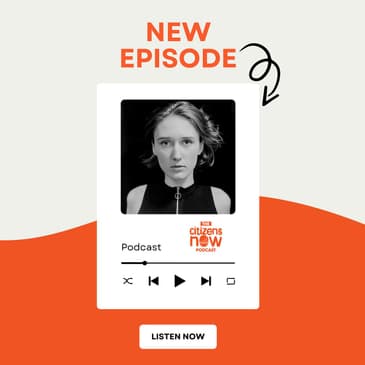
Today’s conversation is with Mia Pobloth, who is currently doing a gap year teaching English at a school in Madrid, but when we spoke, she was a final year pupil at Shimna Integrated College in Newcastle, Co. Down in the North of Ireland/Northern Ireland. Mia was a long-time member of the school’s Amnesty International group and as you may already be aware Amnesty International is a global NGO which campaigns for human rights with over 10 million members and supporters worldwide. Its work particularly highlights prisoners of conscience as well as miscarriages of justice.
In the interview Mia tells us about the kinds of projects her Amnesty group gets involved in, what she’s learned about being an activist, what she’s striving for, and what fuels her to keep going.
My thanks to Shirley Anne McMillan, a former teacher and Alternative Chaplain at Shimna Integrated College who connected me with Mia.
Show links:
Shimna Integrated College
Amnesty International
Gay-Straight Alliance (GSA) – Shimna Integrated College was the first school in Northern Ireland to form a Gay-Straight Alliance which was set up by gay and straight pupils at the college to tackle homophobic bullying.
Nazanin Zaghari-Ratcliffe story
Mia briefly describes the kind of school she attends as an ‘integrated’ school which is a term specific to Northern Ireland. Integrated education is a response to deep divisions in Northern Ireland/the North of Ireland and intentionally brings children and staff from Catholic and Protestant traditions, as well as those of other beliefs, cultures, and communities together in one school. You can find out more from the NI Council for Integrated Education
Mia also mentions how the voting age was lowered to 16 in Scotland and there’s some interesting research on the outcomes from that.
You can listen to the Citizens Now Podcast on all the usual platforms so please subscribe to get access to episodes as soon as they’re released.
For more information about the show or to share your reflections on what you hear, please check out our website and we're on Instagram. If you'd like to be kept up-to-date on upcoming episodes and seasons please subscribe to the Citizens Now Podcast Substack.
If you’d like to contribute to my tip jar, please check out my Ko-Fi page. I’ve put this podcast together in my spare time and out of my own pocket so any help with meeting operating costs (hosting, website, sound mixing etc) will be greatly appreciated.
Credits:
Created, produced, and hosted by: Debs Erwin
Music: GlowCity
Artwork: Rachel Brady
Sound Editing & Mixing: Stu Reid, Stunt Double Music
TRANSCRIPT: Mia Pobloth
Mia: “We're almost like a clean slate, so much of our histories have yet to be written and I think that that kind of new start is exactly what young people bring to the table, because we are, again, so full of hope.”
INTRO
Welcome to the Citizens Now Podcast! My name is Debs Erwin, and this is a space to hear stories of young people from all over the world who are actively working to bring about positive social change.
My conversation today is with Mia Pobloth, a student and human rights activist from Newcastle, Co. Down in Northern Ireland. When we recorded our call, Mia was in her final year at Shimna Integrated College where she was a long-time member of the school’s Amnesty International group, and we talk about some of the human rights campaigns she’s been involved in.
Just a couple of explainers about what you’ll hear. Mia describes her school as an integrated college, and this is a term specific to the education system in Northern Ireland. It refers to schools which bring together pupils from Catholic and Protestant traditions, as well as those of other beliefs, cultures, and communities. There’s more info in the show notes. Also, when we refer to ‘biscuits’ in our conversation, some of you might better understand that as cookies depending on where you’re from!
INTERVIEW
DE: So welcome Mia Pobloth, to the Citizens Now Podcast. I am absolutely delighted that you are able to join us. So, Mia is 18 years old. She is a pupil at Shimna Integrated College and is part of the Amnesty International group there. So, she is going to tell us a little bit about that. She's at a busy point, about to head off to Seville on a school trip. And I'm not jealous at all because it sounds gorgeously warm there right now. And yeah, so she is studying four subjects because she's desperately keen to be busy clearly and is very dedicated. So English Lit, Performing Arts, Spanish and what was the fourth one?
MP: I do politics as well.
DE: Politics. That's right. Yeah. So yeah, that's a really nice blend. So, Mia, tell us a little bit about your school and your journey into getting involved in the Amnesty group and what kind of things you get up to there.
MP: Yes, of course. First of all, thank you very much for having me on the podcast. So, I got involved with Amnesty because my mum is actually a teacher at my school, and she and another staff member were the heads of Amnesty and they started it up in Shimna. So, even all throughout primary school, I was always helping her with making flyers and baking cakes for a bake sale. So, I kind of was aware of Amnesty International before I even got to the point where I could have joined the group. So, then I joined Amnesty when I went to Shimna in first year and have been with them ever since, which is about seven years now, seems like a really long time. Um, and I mean, we do loads of stuff with Amnesty. Recently, we've been focusing on the Food Bank in our own local community and donating stuff to that as a kind of cross-, as a whole school thing. Getting everyone to donate something once a month as a form class so that we can build up kind of care packages that we can give on to the food bank, in this really difficult time. On a wider scale, we've done loads of stuff with the Write for Rights campaign, which Amnesty does every single year, where you send Christmas cards or message of solidarity, messages of solidarity to political prisoners who Amnesty International believes have been falsely imprisoned or are being held unjustly. All sort of stuff like that we've been working on these past couple of years.
DE: Wow, that sounds brilliant. And it's such a nice mix of practical things. And you know, things that are, you know, quite global. Like, what, like seven years, that's an impressive kind of commitment to the group, what are the things that have kept you there and have sustained you in that time?
MP: I think it's definitely, there's a real feeling of community, at least within our Amnesty group. Everyone feels that they're free to talk about whatever they want, and no opinions are kind of quashed, even though they might not be in keeping with everybody else's. I also feel that our Amnesty group in particular is very active, and also bears in mind that there are a lot of younger members of the group that would maybe get bored very quickly if we just repeatedly did the same things. So, we actually have spent a lot of COVID editing the final version of our refugee voices documentary, which is where we went across Northern Ireland and interviewed lots of different refugees, and what their experience has been like with the Northern Irish asylum-seeking system. And it's just things like that, where activism is broadened to things that aren't just going to demonstrations and protesting and I think it shows a lot of the younger students in particular that their activism can go further than that and that they can use whatever skills they have, for example, filmmaking skills, or anything to writing poetry or stories to further their activism and I think that's really important.
DE: Wow, that sounds fascinating. Is that film then the finished product? Are you hoping to, like, publish that? Or have some kind of launch for that?
MP: Yeah, so we actually had a launch, I think it was maybe about eight months ago, something like that. And we sent the documentary out to all the Integrated schools across Northern Ireland, with a learning package with it as well. So, comprehension questions to answer on the video and things that the students who watched it in the other schools could then do to create a safer environment for refugees in their own local area. So, it was kind of like an education programme that we sent out to all these different schools.
DE: Oh, wow, that's, that's brilliant. It must be even more meaningful, just the fact that it's, you've created that as students, so like for other students, so yeah, that's great. Some of our listeners might not necessarily know what an ‘Integrated school’ is. So yeah, I'm curious could you tell us a little bit about the school? And then are Amnesty groups common in schools?
MP: Yeah. So, my school, as you said, is an Integrated school, which is basically where instead of having just Catholic students, or just Protestant students, there's a mix of all religions, ethnicities, and abilities. So, it's very all-inclusive and very diverse, at least compared to a lot of the kind of single religion schools that we see across Northern Ireland. I know, in regards to whether there are a lot of Amnesty groups that before Amnesty signed on to fighting for abortion rights in Northern Ireland, that there were a lot of school Amnesty groups. But then when they expressed their solidarity with women when it came to abortion rights, a lot of schools dropped off the radar with Amnesty because they felt that the issue was too controversial. And that there were maybe parents writing in who didn't maybe agree with that matter. So, I think before that, there had been a lot of groups, but I think now, there are a small handful within Northern Ireland, in schools, but definitely not as many as there used to be.
DE: Like, what would you say is the value of these kinds of groups in schools and, and even, like, how easy do you find it to help young people engage with human rights issues?
MP: I think sometimes it can be difficult because they don't see human rights as something that maybe affects them directly. They just see it as 'Oh, you know, there's people across the waters in these foreign countries who, where atrocities are being committed, but it doesn't really have anything to do with me'. So, I think, a lot of activism, especially when it comes to, you know, human rights organisations like Amnesty International is making sure that young people realise that human rights is something that affects them personally. And that it's not just some alien creation that doesn't have much to do with them. I think that that's a really good starting point, to kind of educate young people on their rights first, before going on to let them help other people. And I think that sometimes that realisation is quite interesting. I mean, I know it was for me, I was kind of like, 'oh, wow, I have human rights as well, it's not just, you know, something that's not to do with me'. So, I think that's quite a, an important factor when it comes to helping young people get into activism and kind of get started with it.
DE: Have there been challenges for your group? You know, and what have they been? Or, you know, what have been the key kind of lessons that you've learned for activism?
MP: Yeah, so I think there was definitely a point maybe about three or four years ago where our membership started dipping quite significantly. It's maybe just because we weren't on top of things as usual, and everyone was quite stressed out. But then we, and it was because we only had one teacher helping run the group at that time, so I think it meant that there was less happening. But then we started getting our numbers back up again, especially kind of after COVID, there have been a lot more people coming. And I'm kind of wondering if that's to do with the fact that with a lot more time at home, and, people having a lot more time on their hands, they were able to look at activism from the kind of perspective of social media because I know that there's been a lot of activism going on over social media, especially over lockdown, when you couldn't go out to demonstrations and things like that. So, I think after that, because people, there was a lot of coverage on things like the Black Lives Matter movement and people were a lot more exposed to it, especially people of my generation on apps like TikTok, they were more open to participating in activism, not just on their phones, but also in physical groups like Amnesty.
DE: Yeah, I'm sure it's like such an important opportunity just for people to, to get together and do things with other people, rather than, as you say, just on your phone. Like, how have you found that, in terms of working with other people, you know, especially in the times when, you know, there's maybe a lot of different ideas or different approaches or, you know, different perspectives on things, how have you found navigating that?
MP: Yeah, I think it's always about keeping in mind that your own opinion is not the only one that matters. So, I think I’ve definitely had a lot of kind of shock moments where someone who I thought, maybe had the same opinion as me, what I thought was the ‘correct’ opinion - is maybe not held by people, even within the Amnesty group. And like I said before, I think that's what's good about it is that the group doesn't put anyone down just because they maybe don't hold the same opinion, or maybe aren't as educated on some things that they're maybe, you know, ignorant to, you know, all these different issues that are affecting people that they maybe don't see in their everyday lives. And I think that it's about bringing these things to light and showing all of the facts to people before putting down their opinions and their beliefs. And I think that's what is key about our group.
DE: Yeah, it sounds like it really takes good kind of relationships. And well, yeah, like effort being put into those relationships.
MP: Yeah definitely.
DE: Do you do stuff for fun as well just like to, yeah, so that it's not all kind of like work, work, work?
MP: All the hard stuff. Yeah, I mean, we have, we have biscuits, every single Amnesty meeting. So, I think that has definitely brought the numbers up a little bit. But we...
DE: Very important!
MP: I know, exactly especially for the younger ones, and me to be completely honest. We've had a couple of movie screenings - there's a local cinema in my town, which is Newcastle, called the Newcastle Community Cinema, which put on screenings for us of movies to do with whatever issues, environmental issues, the issues of refugees. And the cinema has always been really open to screening these for us and a lot of the times have done it for free because as a community organisation they also want to further young people's activism so I think those would kind of be like the fun activities that we do, we go to the cinema together. And then, we also just talk and chat within the Amnesty meetings and it's always like an open space for people to bring in issues that they want to talk about, so it's not something really that's teacher-led, the teachers are there to sort of supervise and maybe channel our activism down one route or another but it's mostly led by the students and the ideas that we put forward which I think is a really great thing to have.
DE: Like you had mentioned a little bit earlier a few years ago, a slight kind of downturn and you know, people having a lot on their plates, so you know what, what fuels you or sustains you, in doing this, and not feeling like 'ugh the problems are too many, they're too big'? What stops you from getting overwhelmed?
MP: To be honest, sometimes nothing and I do get so overwhelmed. But then I think you just have to take issues one step at a time, and I think it's also seeing that there are successes, and that it's not just always bad and going from bad to worse. Like, we had been campaigning for Nazanin Zhagari-Ratcliffe, who was a British national from Iran, who had gone over there to visit her family and then been in prison for ages and ages. And we had been constantly writing letters to the British government, to British embassies in Iran, everything like that for years and years. And we never thought that it was going to happen, because it had been going on for so long and she'd been there for such a long period of time. And then just recently, a few months ago, she was released. And I think that that was such a great moment of achievement for everyone in Amnesty or anyone that deals with human rights organisations, because it saw the UK government putting human rights over other things and kind of past tensions with Iran. And I think that that, and all the other little victories that have come from our Amnesty group, and Amnesty as an organisation are what keeps me and other people in our group going.
DE: Wow, that's brilliant. And that's such a great example. It was such an exciting time, you know, hearing that in the news when she was released, and that just must have been such a buzz for you guys, you know, when you've been kind of, yeah, like really dedicated in that over such a period of time. So nice, nice job.
DE: Broadly, well, you know, for your community, for your school, you know, for Northern Ireland, where you live, and like, beyond - the world, like, what, what's the kind of world that you want to be building?
MP: I think my vision for our world is definitely one that my school puts forward as an Integrated school, we're all about inclusion and diversity, and, above all, empathy. And I think that that is what Amnesty and what I sort of strive to create in our world – human rights and everything to do with that. That's what it's about, it's about being empathetic, and just treating for, for lack of a better phrase that is less cliché, treating everyone the way that you would want to be treated. And I think that people these days are so, there's a great feeling of kind of individualism, and people are kind of not really looking out to the wider community. I think that has a lot to do with the way our society is structured under capitalism. But I think that Amnesty, Amnesty's vision, my vision as an individual, and a lot of my peers are hoping to achieve just a more empathetic society, where people are not penalised for just not agreeing with other people. And I think that that's the main thing that we're striving to do.
DE: That's so great. That's, that's really powerful. Kind of following on from that, I suppose. Like it, obviously, that, yeah, the clue is in the word 'activism', it's an active kind of thing. And, and that's clearly evidenced in what you've been doing with your group. So, I suppose I'm curious about how you see your own power, because it seems like you feel like you've got a very, you know, real kind of role to kind of play. Yeah, how does that feel for you? What does that look like?
MP: Yeah, well, I feel that a lot of the time activism has generally been a thing where the younger generation has thrived because we're maybe more optimistic sometimes than a lot of the older ones who have seen, you know, bad things happen year after year, and all the activism they do, they maybe feel like they're not getting anything out of it. And maybe it's our naivety. But I think that makes it so much better because we have so much hope in us that we're able to just keep going and going no matter if it doesn't work. And when we do get the small victories, like I said before, it's such a monumental occasion for us. And I know that I personally feel like I have a voice that is been listened to, especially within Amnesty as an organisation because I was on the Youth Advisory Group, which is where I flew out to London, and me and a group of nearly 20 other youth Amnesty members from the UK – we kind of advised Amnesty as a business, so the adults that run it, on what we as young people want to see from Amnesty, and we advised them on their new strategy, which they brought out recently on what issues affect us personally, what we think needs, there needs to be more focus on. So, I feel like programmes like that really make us feel like we have a voice, and that we have some sort of say in not just what our governments do, but what these pressure groups like Amnesty do, to make sure that the future that we're going to be living in is one that is governed by us.
DE: That's really encouraging to hear, along with that, a question that I've been asking quite a few folks is about, yeah, what advice they would give for, you know, teachers or youth workers, or anyone who works with young people about, you know, how best to engage young people in this work to support them in this and to, you know, avoid that kind of, I'm sure you've seen it, too, there can be a lot of tokenism, you know, oh, 'young people are the future and oh, yes, we'll listen, we'll pretend that we're going to listen to them'. So, yeah, I'm just curious about what advice would you give for the adults in the room?
MP: I think it's definitely about letting young people be the ones to lead the conversation. So rather than if you have, say, a group of kids, rather than saying, 'Okay, so we're an activist group, and today, we're going to be talking about this, and we're going to be doing this, and then you guys can participate in this way'. I think it's about letting it be more fluid than that, and led by the young people, because then they feel that they actually have a part in it. And that they're the ones that are able to control these decisions. And then they feel more important, and then they want to get involved more, and they get excited about things because it's coming from them. And I think that that has to be the real driving point. It has to be what young people are interested in, and that we just have to be the ones to lead it. And the adults have to be like, kind of pushing us into the right direction when it comes to structuring our activism, rather than what it is we talk about in the issues we tackle.
DE: Obviously, you've had that really positive experience with the Youth Advisory Group for Amnesty. I'm curious, like, are there particular, in other spheres maybe or other topic areas, are there conversations that you would love to be part of that you would love to have a meaningful role as, as a young person? Are there conversations that you feel like young people are getting shut out of?
MP: Yeah, I think definitely one that I as a politics student, I actually, I just went to London recently, and we did tours of the Houses of Parliament and everything like that. And we did a workshop afterwards talking about voting and voting age. And I think that young people, when it comes to activism will always feel if they're, if they're under 18, is what I'm talking about specifically here, we will always feel like we are slightly lesser than the olders, because we do not have a vote in society. So, the activism that we do, is all about pressure rather than about voting for what we believe in. So, I think that there definitely needs to be a conversation about voting age, and that is one that young people need to participate in 100%. Recently, I think it was in Scotland, when they lowered the voting age to 16, the voter turnout, the first election that they did after that, the voter turnout was actually the highest among 16 to 17 year olds. So, I think that in itself shows that we should be given the right to vote at a younger age. And that that power is not something that should be restricted to older generations, just because they believe that maybe we are too immature. But I think that there are many different people, many different studies and sources that could show you contrary to that opinion.
DE: You said earlier about, you know, maybe the naivete of young people is, you know, can be a good thing, because there's that kind of pushing forward for, you know, like a better world, you know, with that kind of hope. So, you know, who knows? Maybe, maybe that's some kind of like superpower. Yeah, so like, what do you think it is that that young people can contribute? You know, what, what is it that you think they can bring to the world?
MP: Well, I think it's that we just have this different perspective. Because people who are a lot older than us, they'll have obviously been on this planet a longer time, and they'll have been shaped by events that maybe aren't as relevant to now, obviously, you know, they can influence people's decisions. But I think that maybe young people, we're almost like a clean slate, we have, you know, so much of our histories have yet to be written and I think that that kind of new start is exactly what young people bring to the table, because we are, again, so full of hope, and so ready to just kind of absorb all information and experience and then put our own thoughts into it, maybe more so than older generations who are not just putting their own thoughts in, but the thoughts of other people or experiences that have shaped them. I just think that young people come to the table with a less influenced mind sometimes, and they're more original and free thinking.
DE: Yeah, there's a bit less baggage there in some ways.
MP: Yes, definitely.
DE: For somebody who is maybe kind of starting out on a journey, so maybe a young person that is wanting to become more involved in some kind of activism, or, you know, maybe say, a youth worker, or a teacher is thinking about, 'Oh, an Amnesty group would be really interesting to start'. What advice would you give, you know, for somebody who's maybe wanting to encourage young people to get into this?
MP: Definitely free biscuits, every single meeting that will boost your membership to 1,000,000% straightaway. No, I think it's about creating a group that doesn't just focus on what, like, there has to be variety within it. Like I said before, if you get stuck in the same kind of just petitions or just doing one thing, there needs to be variation within what you do. And I think that that in itself will bring more members in, because they'll see all these different things being done, especially if it's a school group, doing things like awareness-raising assemblies, or even just a non-uniform day where you pay a pound to wear your own clothes, and then the pound goes towards a cause. There will be more and more kids, you know, then investigating that and saying, 'Oh, what did I just give my money to? What is it that you do?' Or they'll see a bake sale in the hall, where they can then gain more information on a group. So, I think it's about being really present in whatever community it is that you're starting up in, whether it be school, or just like a local community, getting a lot of kind of coverage of your group is definitely important when starting it up.
DE: That's, that's great. Those are really practical pointers. So, what is next for you, because this is your last year at school and how, like, have you particular...? This is maybe you know, one of your kind of like, 'Oh, please don't ask me this question'. But, yeah, if you're happy to say, what are you hoping to do in the future? And also, what are your hopes for, you know, continued kind of activism? How are you hoping that that will, like pan out and shape up in the years to come?
MP: Yeah. So, I am hoping to go to drama school and then become an actor. That is usually met by a round of laughter, by the way. But I think that performance is such, can be such a great tool when it comes to activism, like there are so many actors in particular, Emma Watson, for one who has done so much when it comes to women's rights. And recently, I think it was Michael Sheen, the Welsh actor who said that he would no longer be participating in any, you know, productions in any acting role unless it like would positively benefit. So that was basically an act of activism in itself. And I just think that I could really use my voice as an actor to, you know, bring stories to the forefront and promote causes and just generally continue my activism through performance and through my own medium. But I think definitely when I go to university, I will be looking around for Amnesty groups or GSA groups, anything like that, just so I can keep my activism up when I go away to uni.
DE: Oh, that’s brilliant. I’m really excited for you, I really like your approach, and you’re right, there’s a lot of great examples out there like Emma Watson and Michael Sheen. I wish you well with all of it, with the Amnesty group, with your studies, with heading to Drama School, all of that good stuff. And I’ll put a link in the show notes for your school as well, it’s got a really good reputation so, and you’re definitely a credit to your school and clearly your group is too. So, thank you so much for coming onto the podcast, it’s just been brilliant talking to you, so thank you.
MP: Definitely great to be here. Thank you so much.
DE: Ah you’re welcome, you’re welcome.
OUTRO
I hope you enjoyed listening to Mia as much as I did. I really appreciated her practical advice for adults who want to encourage young people into activism as well as her honesty about some of the challenges of committing to activism for the long-haul. I’m also inspired by her aspirations and the potential she sees in using her voice and platform to highlight stories of injustice. I’d love to hear what you think about the interview, so please share your thoughts by visiting https://www.citizensnowpodcast.org/ where you will also find a transcript.
Next week the podcast takes a spin to the other side of the globe when we’ll be speaking with Kate Yeung who is based in Australia and works with MYAN, the Multicultural Youth Advocacy Network. It’s a fascinating conversation - so please subscribe to the podcast and if you’ve enjoyed this episode, please do share it with others so that more people can find out about us. Thank you.